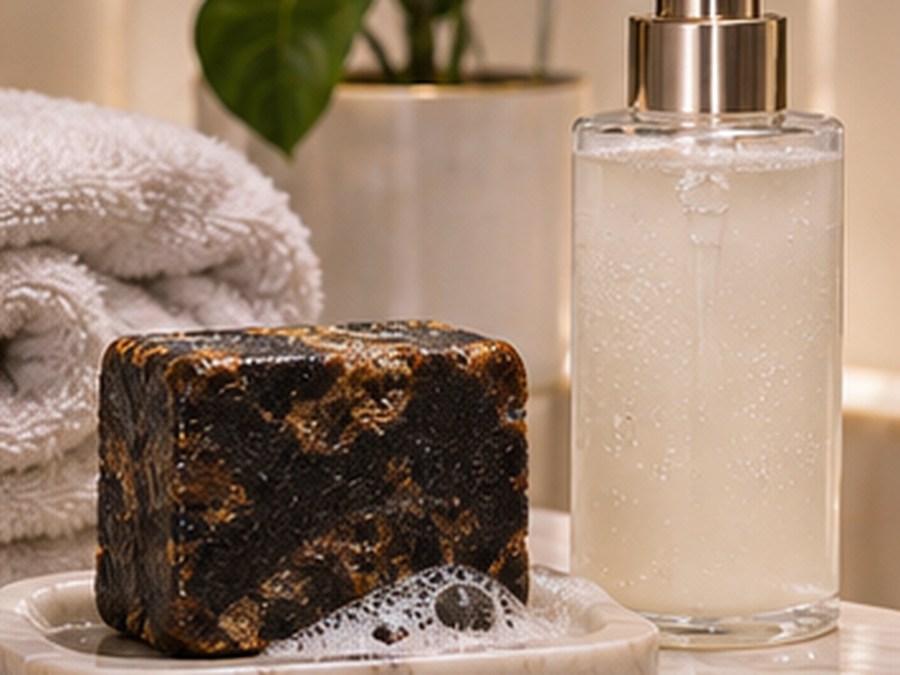
The Saponification Chemistry of Plantain Ash
Traditional European soaps are made by reacting oils with synthetic sodium hydroxide (lye). Authentic African black soap uses traditional potash (potassium hydroxide) derived from water-leached ashes of sun-dried plantain skins, cocoa pods, and shea tree bark.
This alkaline ash water saponifies unrefined palm kernel and shea oils into natural soap. The resulting bar naturally retains high levels of natural glycerin and polyphenols, providing intense antimicrobial activity against *Cutibacterium acnes* bacteria while thoroughly removing stubborn fungal buildup.
The Direct Bar Rubbing Hazard
Because artisanal black soap is handcrafted in villages using roasted cocoa pods and plantain skins, tiny microscopic fragments of unground roasted shells remain embedded in the raw bar.
If you rub the rough bar directly across your face like commercial soap, those hard ash fragments will act like sharp sandpaper, scratching micro-tears into your stratum corneum. Always wet your hands, rub the bar between your palms for 5 seconds to build a rich, pillowy foam, and apply only the foam to your face.