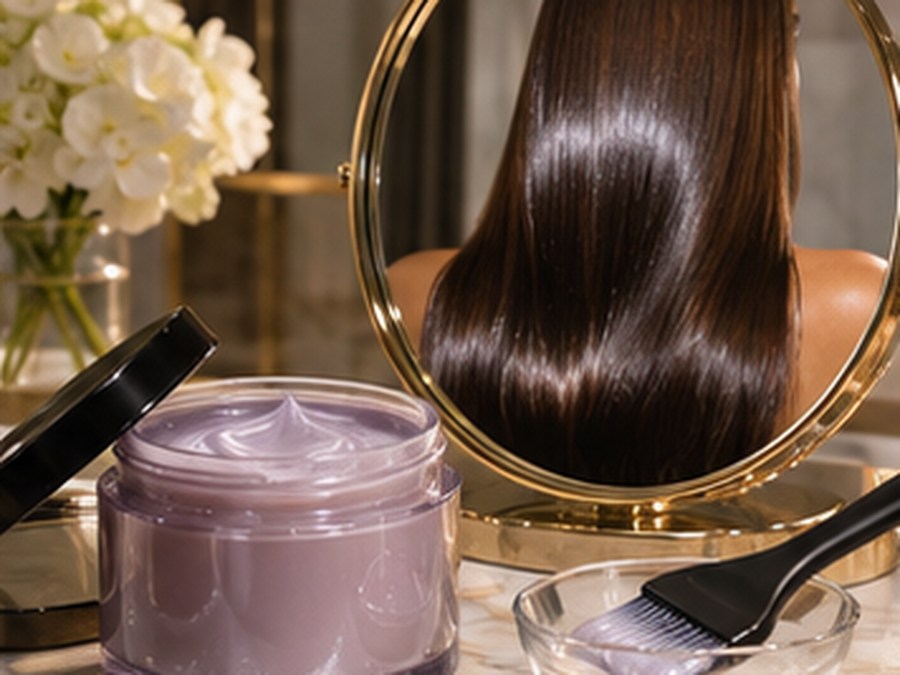
The Physics of Acidic Cuticle Smoothing & Specular Reflection
Hair dullness is purely an optical phenomenon: when the microscopic shingles of the cuticle are raised and damaged by heat, light strikes them and scatters diffusely in all directions (Lambertian scattering), making hair look flat, dry, and matte.
At-home hair glosses operate at an acidic pH (approximately 4.5). The acidity neutralizes alkaline water swelling, causing the cuticle scales to contract and lay completely flat against the cortex. When light hits this smooth, uniform cylinder, it bounces back in a unified direction (specular reflection), creating that breathtaking, blinding 'liquid glass' hair reflection.
The Porosity Equalization Trick
Over-processed, bleached ends have high porosity and absorb color pigments much faster than healthy roots, which can result in dark, muddy, over-toned ends.
Apply your tinted gloss first to the roots and mid-lengths. Only comb the product through the porous ends during the final 3 minutes of development time to achieve a perfectly balanced, salon-uniform tone.