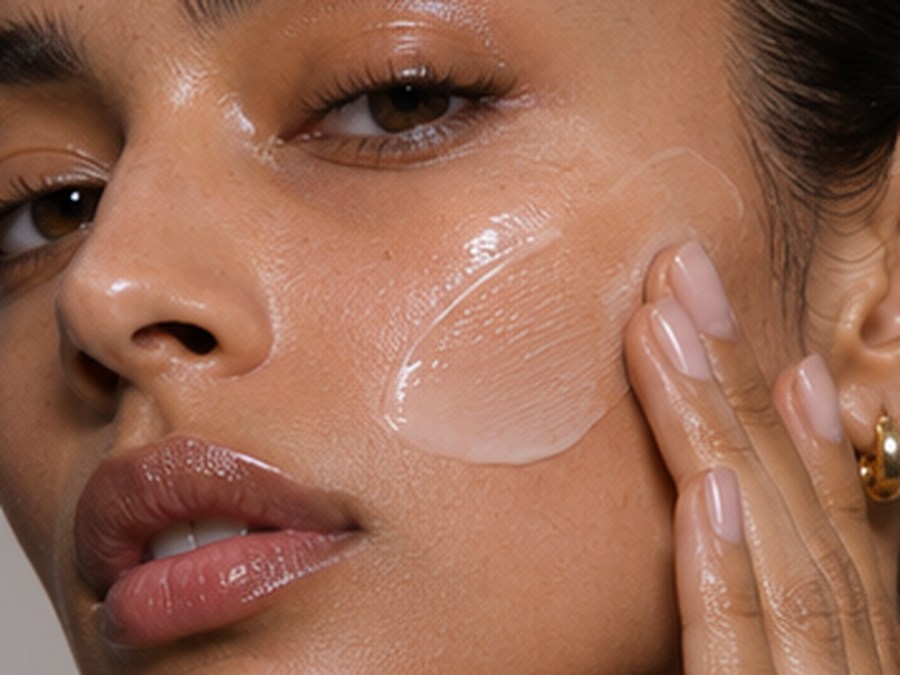
The Chemistry of the 'Tacky Phase'
Traditional makeup primers rely heavily on dimethicone and cyclopentasiloxane to create a slippery, velvety barrier that fills pores. While this provides initial slip, facial oils produced throughout the day dissolve these silicones, causing foundation to slide, break apart, and settle into smile lines.
Gripping primers operate on adhesive polymer chemistry. Using natural plant hydrocolloids (like blue agave extract) combined with concentrated hyaluronic acid and PVP, they form an elastic, tacky lattice on the skin. This molecular structure physically anchors foundation pigments to your face, neutralizing sebum breakdown.
The 60-Second Rule & Avoidance of Pilling
The number one error with gripping primers is applying foundation immediately while the primer is still wet. This mixes the wet polymer into your foundation, resulting in uneven streaks and micro-pilling.
Dispense 1 to 2 pumps, blend evenly across the face using pressing motions, and wait a full 60 seconds. Touch your cheek: when your fingertip feels a slight magnetic resistance ('tackiness'), your canvas is perfectly prepped for foundation.