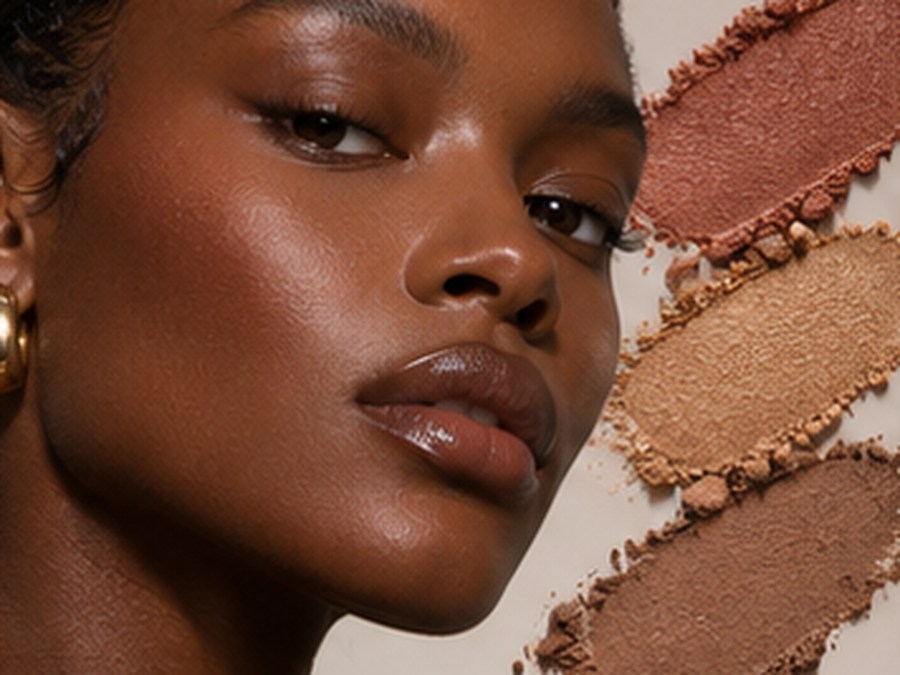
The Chemistry of Ashiness: Why Talc Fails Deep Skin
For decades, the cosmetics industry formulated bronzers by taking fair powders and adding brown iron oxides. These formulations relied on high percentages of white talc and mica as cheap base fillers. On fair skin, white filler is invisible; on melanin-rich deep skin, the high refractive index of white talc scatters light, appearing chalky, gray, and ashy.
Modern luxury bronzers formulated for deep skin replace white fillers with transparent synthetic fluorphlogopite and micronized red, yellow, and black iron oxides. This transparent base ensures the true undertone of the bronzer transmits directly onto the skin without distortion.
Mapping Undertones: Red vs. Golden vs. Neutral
1. Red Undertone: If your skin tans with rich crimson warmth and gold jewelry pops, a terracotta-red bronzer (like Fenty Mocha Mami) mimics natural sun exposure beautifully. 2. Golden Undertone: If your skin has yellow or olive undertones, warm amber and golden-bronze shades prevent yellow from appearing dull.
3. Neutral / Espresso Undertone: If your complexion features balanced undertones with equal warm and cool elements, neutral mahogany and deep espresso shades provide sculpted depth without looking artificially orange.