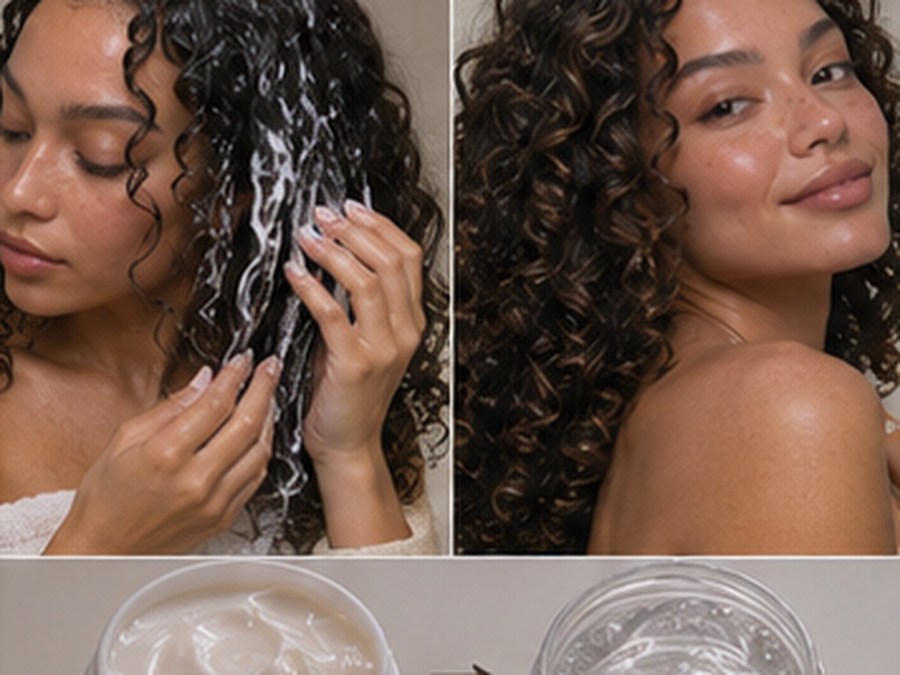
The Emulsion Chemistry: Why Creams and Gels Must Cooperate
Curl creams are water-in-oil or oil-in-water emulsions rich in fatty alcohols (cetyl, stearyl alcohol) and plant triglycerides (shea, avocado). Their job is internal: penetrating the porous cuticle to lubricate keratin fibers and prevent mechanical friction.
Styling gels are aqueous solutions of film-forming polymers (PVP, polyquaternium, acrylates copolymer). When layered over cream, the gel dries on the exterior surface of the clump, forming a rigid, transparent scaffolding known as the 'cast'. This cast preserves the curl geometry while moisture evaporates.
The Palm Test: Preventing Product Pilling
A frequent styling disaster is white flakes or peeling residue caused by chemical incompatibility between a cationic curl cream and an anionic carbomer gel.
Always perform the palm test before applying to your head: rub a nickel-sized amount of your cream and gel together in your palms. If the mixture remains smooth, silky, and translucent, they are safe to layer. If they curdle into white curds or clumpy balls, discard the combination immediately.