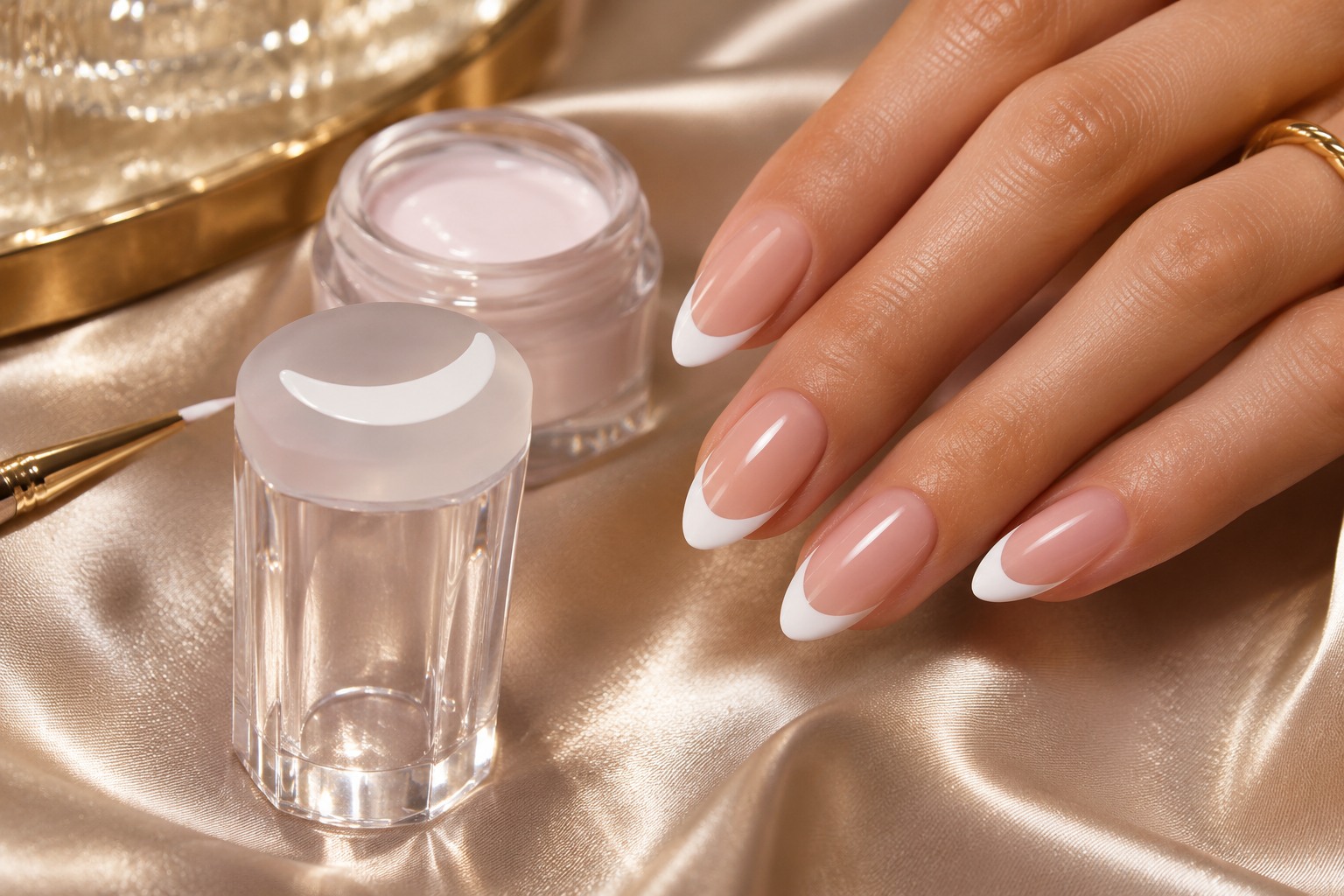
The Physics of Elastic Deformation: Why Jelly Stampers Work
Freehanding a French manicure smile line with a striping brush requires immense fine-motor stability to match the natural C-curve of each nail. Inevitably, the non-dominant hand produces shaky, asymmetrical lines.
Silicone jelly stampers operate on elastic polymer physics. Silicone possesses high Poisson's ratio and low Shore durometer hardness. When you press the convex edge of your nail into the soft silicone pad at an angle, the cushion deforms elastomericly around the sides of the nail plate. The wet polish wraps evenly around the free edge, creating an optically perfect, mathematically uniform smile line.
The Stamper Prep Secret: No Acetone on Jelly
A fatal error made by beginners is wiping silicone jelly heads with pure acetone to clean them. Acetone chemically etches and clouds silicone polymers, turning transparent heads permanently milky, brittle, and cracked.
Always clean your silicone stamper using a standard sticky lint roller or scotch tape. Simply press the stamper onto the adhesive tape; dried polish and dust will lift away cleanly, leaving the silicone crystal-clear.