Mechanobiology: Lymphatic Stimulation vs. Myofascial Release
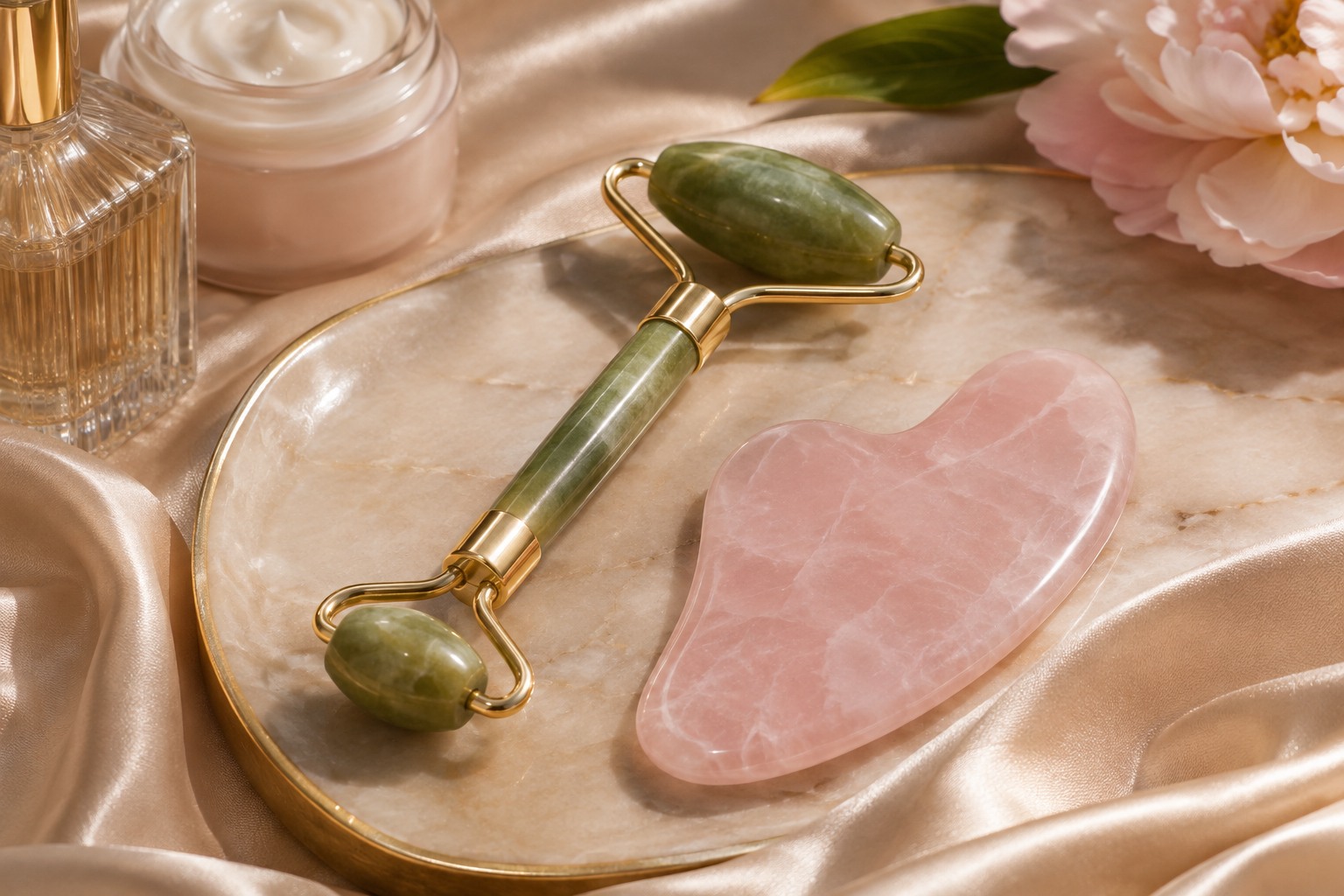
Traditional Chinese Medicine (TCM) developed gua sha over 2,000 years ago as a therapeutic scraping technique. In modern facial aesthetics, the tool operates through two distinct physiological pathways: 1. Lymphatic Drainage: The superficial lymphatic vessels in the face lack muscular pumps, leading to overnight fluid accumulation (morning puffiness). Gentle directional pressure moves stagnant lymph fluid down the neck toward the clavicle nodes.
2. Myofascial Release: Unlike a jade roller which glides over the skin's surface, a flat gua sha stone held at a 15-degree angle allows deep cross-friction over the masseter and temporalis muscles. This releases chronic jaw clenching (bruxism) and tension headaches while smoothing expression lines.
The 15-Degree Angle: The Essential Technique
The most frequent amateur mistake is holding the gua sha stone perpendicular (at a 90-degree angle) to the face, scraping with the sharp edge like a knife. This can bruise tissue and cause micro-tears.
The stone must be held almost completely flat against the skin—at a 15-degree angle. Support the skin with your opposite hand to prevent pulling, and glide the curved stone gently upward and outward using light to medium pressure.