Mechanical Abrasion vs. Enzymatic Desquamation
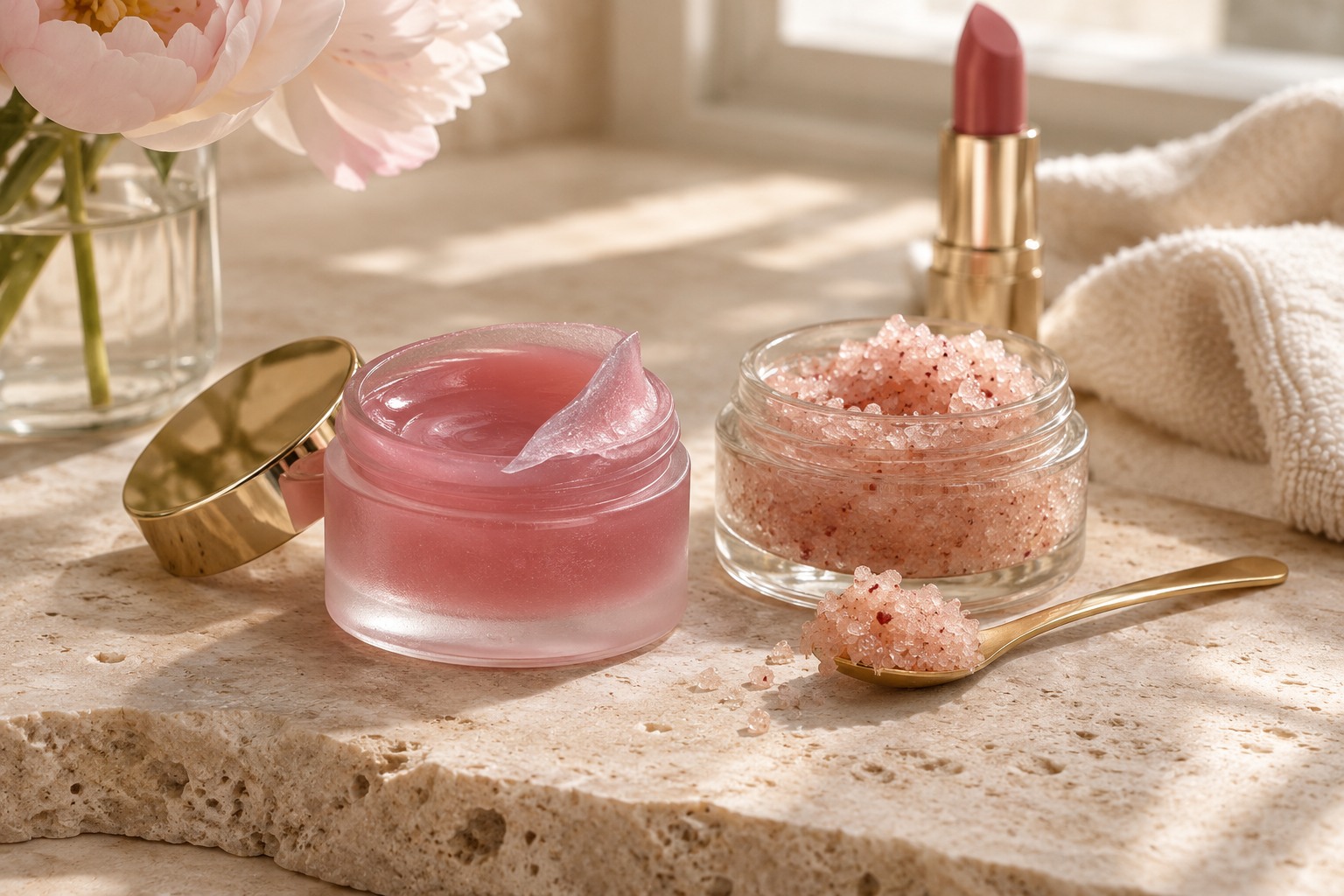
To choose the right prep method, consider the cellular architecture of lip skin. Lip tissue lacks hair follicles and sebaceous glands, possessing a stratum corneum only one-third the thickness of facial skin: 1. Physical Sugar Scrubs: Work through mechanical friction. Granular sucrose crystals buff away detached, loose corneocyte flakes. However, vigorous rubbing with coarse crystals can cause microscopic fissures and bleeding in fragile vermilion borders.
2. Chemical Lip Peels: Utilize low-percentage, large-molecule alpha hydroxy acids (lactic, mandelic) or natural fruit enzymes (papain, bromelain). These acids break the ionic bonds of cellular glue (desmosomes) without requiring any mechanical friction, making them exceptionally safe for sensitive or cracked lips.
The Post-Exfoliation Moisture Window
Exfoliating lips without immediately applying an occlusive balm is a recipe for severe rebound dryness. When you strip away dead surface cells, the underlying viable tissue is exposed to ambient air.
Immediately after wiping away your sugar scrub or allowing your chemical peel to absorb, apply a thick layer of a ceramide-rich lip mask or pure lanolin. Wait 5 minutes for the lipids to soften the tissue, blot gently with a tissue, and apply your matte lipstick for flawless, crack-free wear.