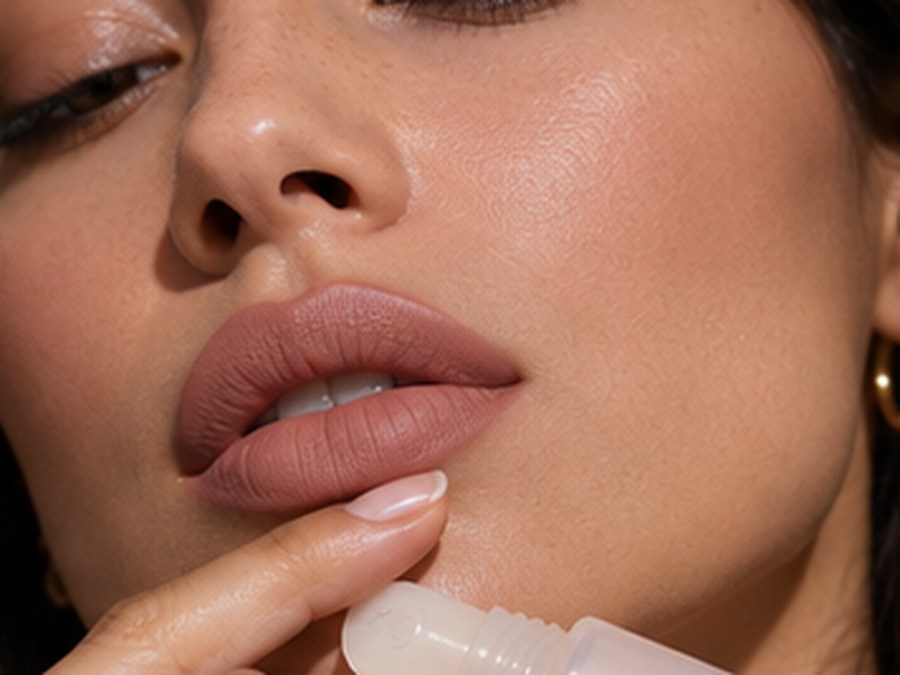
The Chemistry of Matte Lipsticks: Why Balms Destroy Them
Matte lipsticks and long-wear liquid lip lacquers are formulated with high pigment-to-wax ratios, volatile isoparaffin solvents, and synthetic film-forming polymers. They achieve their velvety, transfer-proof finish when the volatile solvent evaporates, leaving behind a dry, locked pigment film.
The fatal error many people make is applying regular lip balm directly under matte lipstick. Lip balms contain heavy mineral oils, petrolatum, and plant triglycerides. These liquid oils act as chemical solvents that dissolve the lipstick's polymer film, causing the lipstick to slide, break apart into patchy curds, and bleed into surrounding skin.
How Specialized Lip Primers Function
Specialized lip primers (like MAC Prep + Prime Lip) are formulated with cross-linked dimethicone elastomers, synthetic beeswax, and silica. Rather than leaving a greasy liquid pool, they dry down to an invisible, dry-touch velvet mesh.
This mesh physically fills the deep microscopic vertical wrinkles of the lips, creating a perfectly flat, uniform canvas. The primer's polymers form an adhesive anchor that bonds to both the lip tissue and the incoming lipstick pigments, extending wear time while preventing that tight, dehydrated sensation.