The Geochemistry of Rhassoul Clay & Cationic Adsorption
Moroccan Rhassoul clay (derived from the Arabic word 'rhassala', meaning to wash) is an ancient smectite clay mined exclusively from subterranean deposits in the Moulouya Valley of Morocco. It is exceptionally rich in magnesium (approx. 25%), silicon (58%), and calcium.
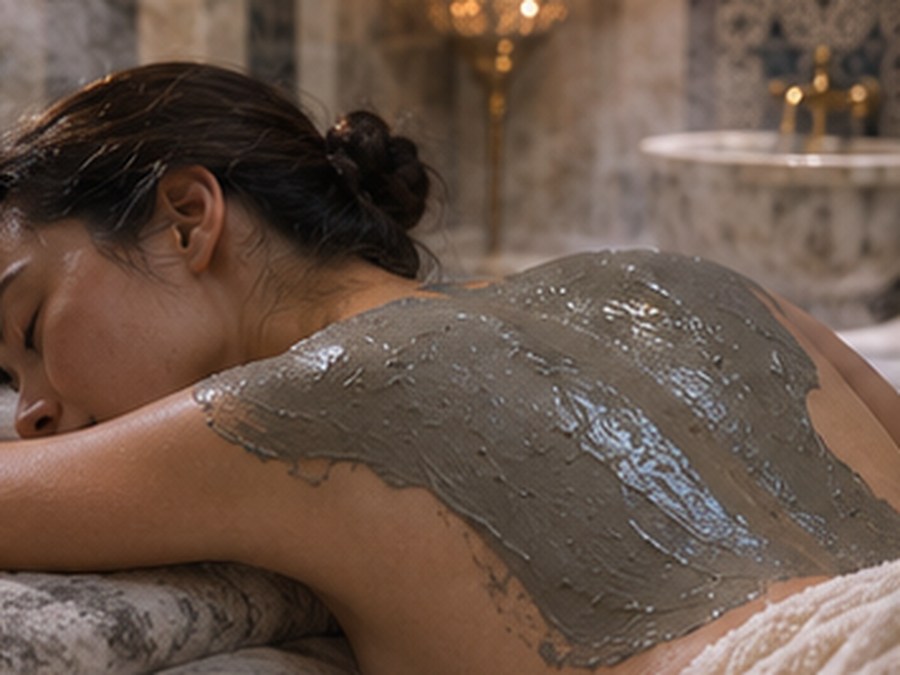
Rhassoul clay carries a strong negative electrostatic charge. When mixed with warm water and applied across the body, it attracts positively charged environmental impurities, heavy metals, oxidized sebum, and toxins through cationic ion exchange, binding them tightly to the clay matrix so they rinse away cleanly.
The Three-Step Thermodynamic Hammam Ritual Protocol
Step 1: Steam & Saponification: Running a hot shower builds thick steam. Applying Moroccan olive-oil black soap for 10 minutes softens the intercellular lipids holding dead skin cells together.
Step 2: Kessa Mechanical Desquamation: Vigorous, long strokes with the damp crepe kessa glove roll away dead keratin sheets (visible 'dead skin rolls') without chemical redness.
Step 3: Thermal Mud Masking: Coating the freshly exfoliated skin in warm mineral-rich mud floods the open pores with magnesium and silica, followed by pure cold-pressed argan oil to seal the skin barrier.