Respiratory Health Risks: Why Nail Dust Is a Serious Biohazard
Filing artificial nail enhancements—especially acrylics, polygel, hard gels, and dip powders—generates respirable dust particles smaller than 10 microns in diameter. These microscopic particles bypass the body's natural nasal filtration hairs and travel deep into the pulmonary alveoli. Chronic exposure without adequate localized extraction can cause occupational asthma, chronic rhinitis, chemical allergies, and respiratory fibrosis.
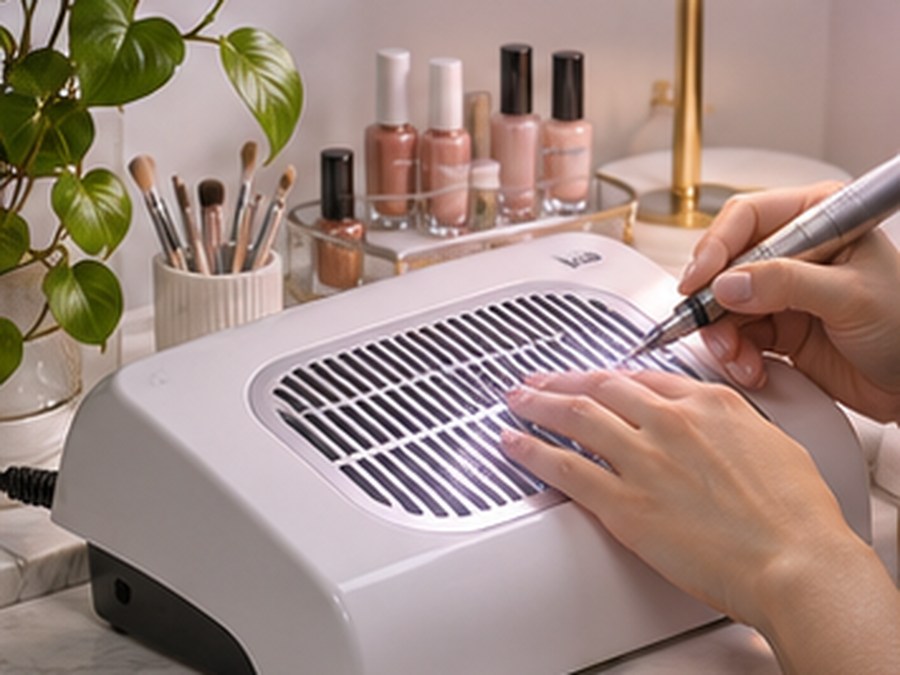
Standard paper face masks only trap larger flying chips; they do not seal against fine airborne dust clouds created by 30,000 RPM e-files. A localized source-capture vacuum pulls particulate matter downward out of your breathing zone the microsecond it shears off the nail.
HEPA Pleated Filters vs Reusable Cloth Bags
Early generation nail dust vacuums utilized porous cloth collection bags clamped behind a generic computer fan. As the bag filled, air pressure forced fine dust straight through the woven fabric fibers, billowing invisible clouds back into the room and onto work surfaces. This created a false sense of cleanliness while actually redistributing hazardous dust.
Modern collectors utilize dense, medical-grade HEPA pleated paper filters. The microscopic fiber lattice traps micro-dust within its accordion folds via impaction and electrostatic capture. HEPA filters ensure that exhaust air returning into your room is thoroughly purified and free of irritating acrylates.
Airflow Velocity vs Decibels: Achieving the Quiet Sweet Spot
When evaluating dust extractors, there is an inherent engineering tradeoff between suction velocity (CFM) and motor noise. High-RPM axial fans create immense air displacement but produce high-pitched whining that causes auditory fatigue during a two-hour nail set.
Look for collectors that employ backward-curved centrifugal turbine fans or brushless DC motors. These generate high static suction pressure at lower RPMs, pulling heavy acrylic debris down smoothly while maintaining operating volume below 60 decibels—equivalent to moderate conversational speech.