A practical, considered edit for polyglutamic acid vs. hyaluronic acid. Polyglutamic Acid vs. Hyaluronic Acid: Which Texture Fits Your Routine? calls…

Arkely · Skincare

Polyglutamic Acid vs. Hyaluronic Acid: Which Texture Fits Your Routine?

As an Amazon Associate we earn from qualifying purchases. Affiliate disclosure

Curated Beauty Edit

The Most Compelling Formulations to Know

Best Overall Clinical Polyglutamic Acid Serum

The Inkey List Polyglutamic Acid Dewy Hydrating Serum

A viral, high-potency 3% PGA complex that floods the skin surface with moisture. Creates a breathable, ultra-plumping micro-film that smooths fine dehydration lines and serves as an immaculate luminous makeup primer.

Best for: Dull, dehydrated skin, plumping fine surface lines, and dewy glass-skin makeup prep.

Check current price on Amazon
Best Multi-Molecular Hyaluronic Acid Serum

The Ordinary Hyaluronic Acid 2% + B5 (New Formulation)

An iconic reformatted humectant complex featuring 5 molecular weights of hyaluronic acid and provitamin B5. Penetrates multiple dermal layers to provide instant suppleness without pilling or stickiness.

Best for: Budget-friendly multi-depth hydration and sensitive skin barrier replenishment.

Check current price on Amazon
Best Luxury HA + PGA Plumping Cocktail

Charlotte Tilbury Charlotte's Magic Serum Crystal Elixir

A high-performance luxury elixir combining polyglutamic acid, REPLEXIUM peptides, and golden vitamin C. Clinically proven to dramatically boost skin hydration and elasticity under luxury foundation.

Best for: Red-carpet makeup prep, mature skin firming, and radiant youth-boost.

Check current price on Amazon
Best Korean PGA Deep Hydration Cream

Torriden DIVE-IN Low Molecular Hyaluronic Acid Serum

A clean K-beauty best-seller formulated with 5D-complex low-molecular hyaluronic acid, D-panthenol, and allantoin. Delivers soothing, weightless hydration that quenches cutaneous thirst in seconds.

Best for: Sensitive, acne-prone, and reactive skin types needing oil-free moisture.

Check current price on Amazon
Best Dermatologist Hyaluronic Gel-Cream

Neutrogena Hydro Boost Water Gel with Hyaluronic Acid

A lightweight oil-free water gel powered by purified hyaluronic acid. Instantly absorbs into thirsty skin like a drink of water, locking in 48-hour continuous hydration without clogging pores.

Best for: Oily and combination skin types craving fast-absorbing, non-greasy hydration.

Check current price on Amazon

Executive Briefing

The Fast Overview You Need to Know

Mastering the Ritual

Professional Principles for Flawless Results

Molecular Biophysics: Glycosaminoglycans vs Gamma-Polyglutamate

To understand the functional differences between Hyaluronic Acid (HA) and Polyglutamic Acid (PGA), one must examine their chemical origins and molecular footprints. Hyaluronic acid is an endogenous glycosaminoglycan naturally synthesized by human fibroblasts and keratinocytes. While native HA is a large molecule (over 1,000 kDa), modern cosmetic formulations hydrolyze it into fragmented weights—ranging from 50 kDa to 1,500 kDa.

Low-molecular HA fragments slip easily between intercellular lipid bilayers into the viable epidermis, drawing water from the bloodstream to hydrate deeper cellular zones. Polyglutamic acid, by contrast, is a naturally occurring water-soluble biopolymer formed by the fermentation of Bacillus subtilis (the bacterial culture used in Japanese fermented natto beans). PGA consists of long-chain d- and l-glutamic acid units forming a massive molecular web (typically 1,000 to 2,000 kDa).

The Hyaluronidase Enzyme Inhibition Mechanism

PGA possesses a remarkable biochemical property that elevates it above traditional humectants: it functions as a natural inhibitor of hyaluronidase. In human skin, hyaluronidase is the endogenous catabolic enzyme responsible for breaking down natural hyaluronic acid reserves as part of routine cellular turnover.

As we age, hyaluronidase activity outpaces synthesis, leading to progressive dermal volume loss and crepiness. By applying topical polyglutamic acid, you physically inhibit hyaluronidase activity, thereby preserving your skin's own innate hyaluronic acid levels while simultaneously coating the exterior in a water-binding film that holds 5,000 times its molecular weight.

The Strategic Layering Blueprint: The 3D Hydration Sandwich

Because HA and PGA operate at different epidermal tiers, choosing between them is unnecessary—they work most magnificently as a synchronized duo. The golden rule of cosmetic chemistry is to apply products in order of molecular weight from smallest to largest.

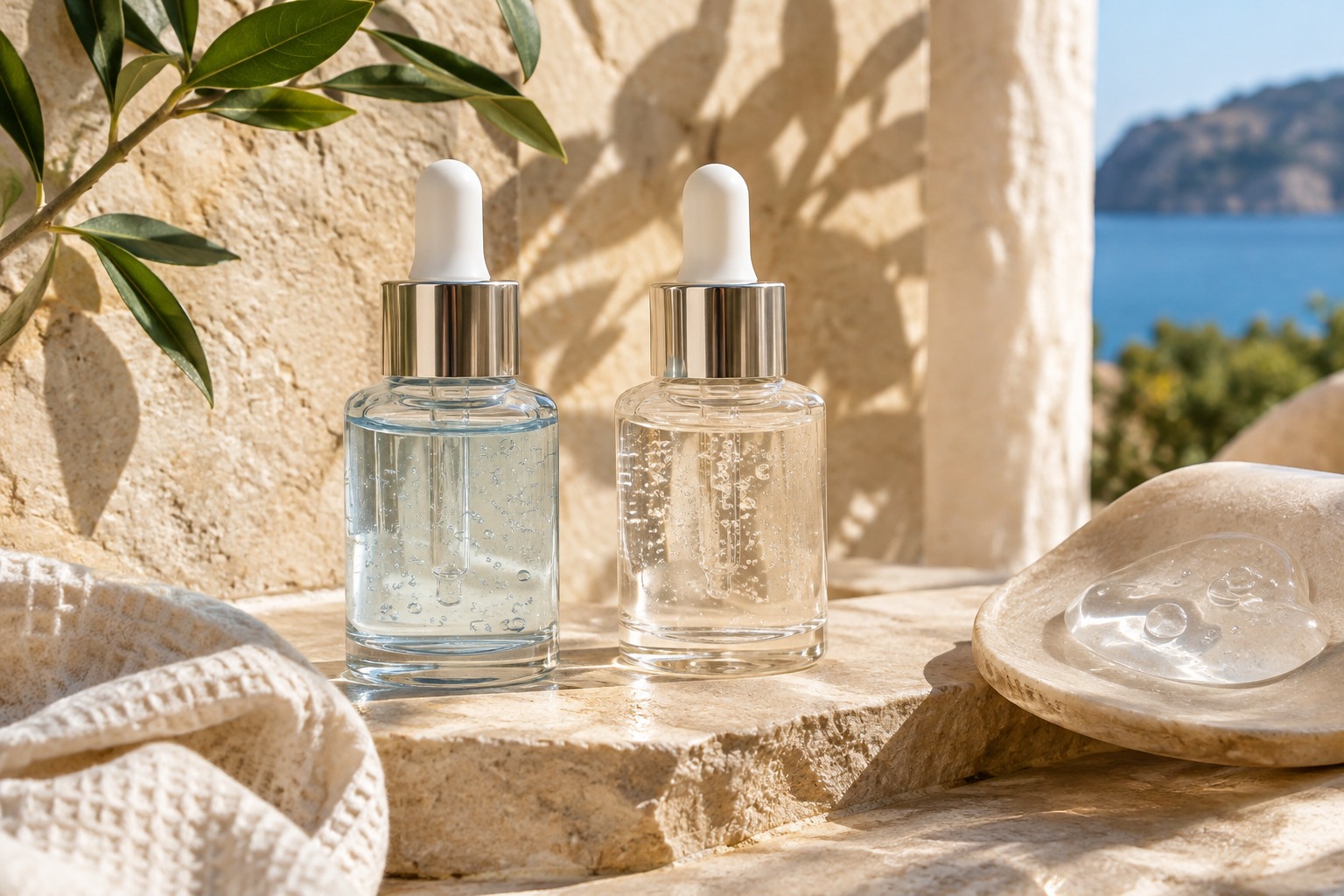
Begin by misting clean skin with water or thermal mist. Apply your low-molecular Hyaluronic Acid serum first so its tiny molecules can dive deep into epidermal channels. Immediately follow with your Polyglutamic Acid serum. The PGA acts as a flexible, high-gloss moisture trap, sealing the HA beneath it and preventing ambient dry air from siphoning hydration out of your skin.
The Purchasing Blueprint

Key Features to Check for Your Specific Profile

Precision Method

Step-by-Step Instructions for Superior Payoff

  1. Wash your face and leave skin noticeably damp; humectants require available water to trap into the stratum corneum.
  2. Apply 2 to 3 drops of low-to-medium weight Hyaluronic Acid serum first, pressing firmly into the face and neck until absorbed.
  3. Layer 1 to 2 drops of Polyglutamic Acid serum directly over the top to form a glassy, protective moisture barrier.
  4. Seal the routine with your favorite ceramide moisturizer or sunscreen to prevent water evaporation throughout the day.
Pro Tip & Recommendations Formulations, packaging, and availability are subject to change. Verify current details directly on Amazon.

The Ultimate Pick

If You Only Choose One Formula from This Edit

Best Overall Clinical Polyglutamic Acid Serum

The Inkey List Polyglutamic Acid Dewy Hydrating Serum

A viral, high-potency 3% PGA complex that floods the skin surface with moisture. Creates a breathable, ultra-plumping micro-film that smooths fine dehydration lines and serves as an immaculate luminous makeup primer.

Best for: Dull, dehydrated skin, plumping fine surface lines, and dewy glass-skin makeup prep.

Check current price on Amazon

Common Inquiries

What Readers & Enthusiasts Ask Most Often

Why does hyaluronic acid make my skin feel tighter and drier in winter?

Hyaluronic acid is a pure humectant that draws water from wherever it is most abundant. In dry climates or indoor winter heating (relative humidity below 40%), HA cannot pull moisture from the air, so it draws water upward from your dermis, causing rebound dehydration. Always apply HA to damp skin and lock it in with PGA or an occlusive cream.

Can I use Polyglutamic Acid as a makeup primer?

Yes! Polyglutamic acid has become a staple in celebrity makeup artist kits because its large molecular matrix creates a smooth, cushiony, optical-blurring surface film that prevents foundation from clinging to dry patches or settling into fine lines.

Is Polyglutamic Acid suitable for acne-prone skin?

Absolutely. High-purity PGA is completely water-soluble, non-comedogenic, and oil-free. It provides intense, glass-like hydration without utilizing heavy pore-clogging plant butters or mineral oils.