Post-Acrylic Trauma: What Actually Happens to the Keratin Bed
The post-acrylic nail dilemma is rarely caused by the acrylic polymer itself; rather, it is the result of mechanical salon preparation and aggressive removal. To ensure acrylic adheres for weeks, nail technicians frequently use 80-to-100-grit coarse files or high-speed e-file sanding bands to rough up the nail plate, grinding away the tough dorsal keratin layer.
During removal, 100% pure acetone soaks strip away every trace of natural squalene, cholesterol, and moisture from the remaining intermediate and ventral nail layers. Furthermore, scraping softened acrylic with metal pushers shears off additional onychocyte cells, leaving behind a paper-thin, sensitized nail plate that bends backward at the slightest touch.
The Rehabilitation Window: Rebuilding the Lipid Matrix
The human fingernail takes between 4 to 6 months to completely regenerate from the germinal matrix located beneath the proximal cuticle fold to the free edge. During the first 4 to 6 weeks post-removal, the priority is not making nails 'hard'—it is making them flexible and water-resistant.
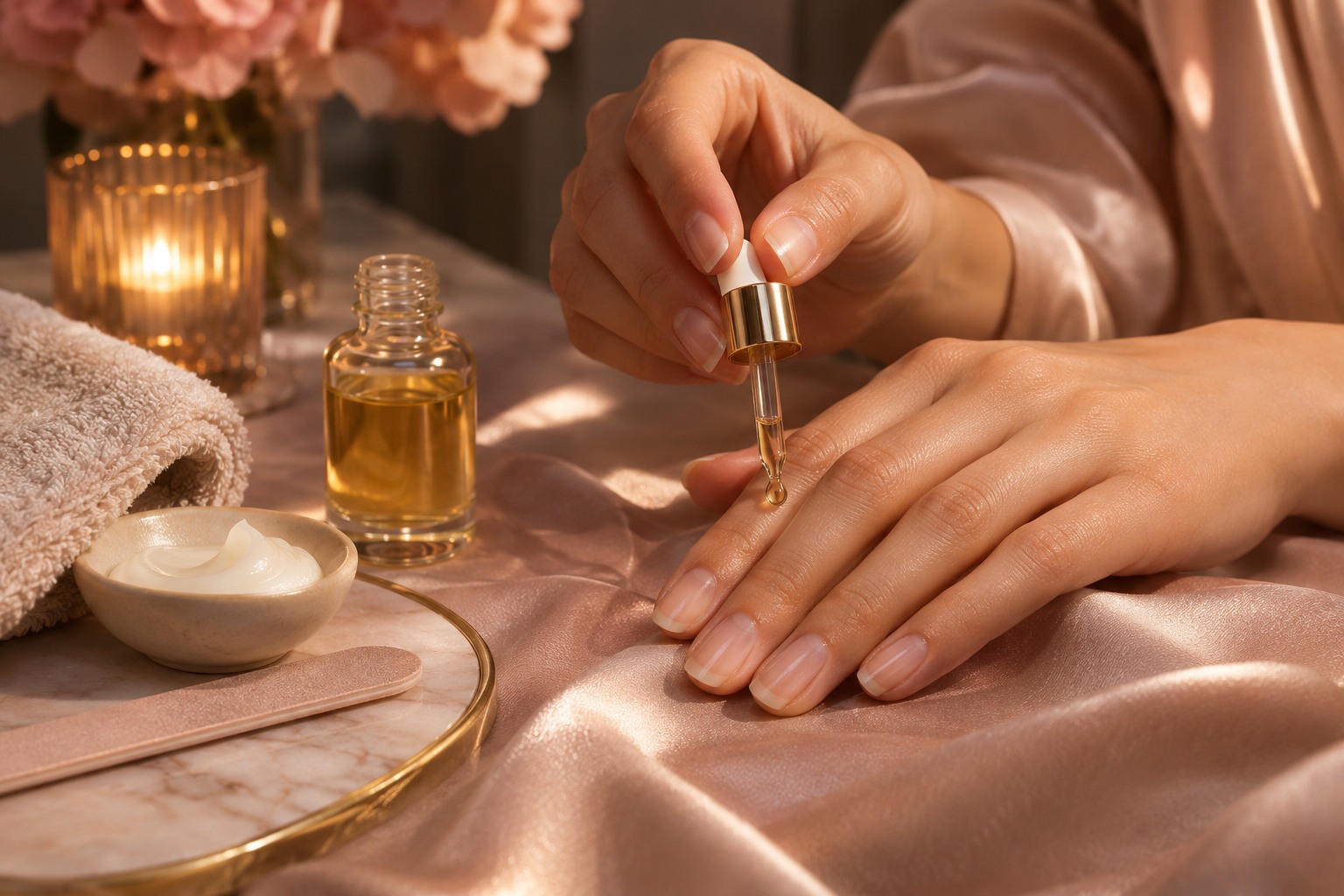
Keratin is naturally hygroscopic: bare, damaged nails absorb up to 30% of their weight in water when you wash your hands or shower. This constant swelling and contracting (hydral fatigue) causes remaining layers to delaminate and flake. Saturating the nail bed multiple times daily with biomimetic jojoba oil displaces water and restores the inter-cellular lipid glue holding keratin together.
The Strategic Filing Protocol: Keep Them Short and Rounded
When nails are thin and compromised, maintaining long square or stiletto tips creates immense mechanical leverage against the weakened nail bed. A minor bump against a desk can rip the nail down into the vascular pink bed, causing painful subungual hematomas.
Trim natural nails down to the fingertip perimeter and shape them into a soft squoval or rounded contour using a Czech etched glass file. Filing should always be executed in a single fluid direction—never saw back and forth—to seal the delicate distal keratin margin and prevent snagging on sweaters.