Dermatological Origins: Why 'More Actives' Destroyed Skin Barriers
Skin cycling was popularized by New York board-certified dermatologist Dr. Whitney Bowe in response to an epidemic of damaged skin barriers caused by overzealous multi-step skincare routines. During the late 2010s, consumers frequently layered glycolic toners, 2% salicylic serums, 1% pure retinols, and ascorbic acid in a single evening.
This active ingredient bombardment overwhelmed the stratum corneum. Continuous acid stress disrupts the lipid matrix (ceramides, cholesterol, and free fatty acids) and elevates skin pH, denaturing natural moisturizing factor (NMF) enzymes. The result is chronic transepidermal water loss (TEWL), stinging upon applying even plain water, micro-fissuring, and reactive rebound acne.
Chronobiology of the 4-Night Skin Cycling Cycle
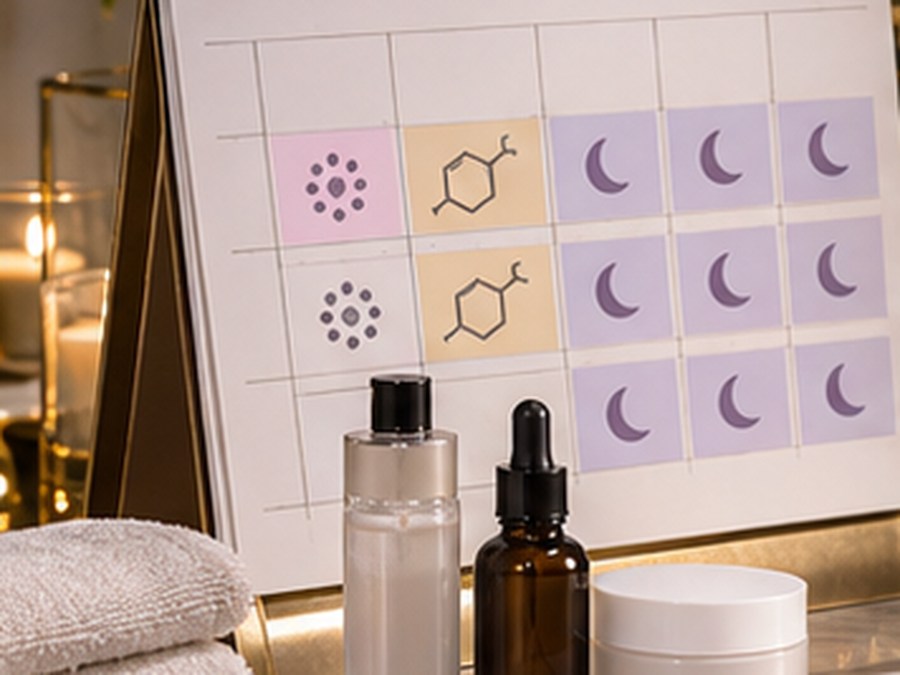
Skin cycling works by aligning cosmetic actives with the skin's circadian biological rhythms. Night 1 (Exfoliation) clears the deck. Chemical keratolytics (AHAs or BHAs) sever desmosome protein bridges between dead corneocytes, removing the outer layer of cellular debris. This increases cellular permeability.
Night 2 (Retinoid) takes advantage of this newly exfoliated canvas. Retinol or retinaldehyde penetrates cleanly into viable epidermal layers, binding to retinoic acid receptors to stimulate fibroblast collagen synthesis and basal cell mitosis. Nights 3 & 4 (Recovery) provide the indispensable biological rest window. Cell division and tissue remodeling demand lipid synthesis; recovery nights flood the tissue with ceramides, squalane, and fatty acids to rebuild the protective brick-and-mortar barrier before the next cycle begins.
Customizing the Cycle: The 3-Night and 5-Night Variations
While the classic 4-night cycle (Exfoliate, Retinoid, Recover, Recover) is ideal for 85% of people, the protocol can be clinically modified based on individual skin tolerance. Advanced users whose barriers are fully retinized can transition to the 'Gentle 3-Night Cycle' (Exfoliate, Retinoid, Recover), increasing retinoid frequency to every third evening.
Conversely, individuals with hyper-sensitive skin, rosacea, or transitioning to prescription tretinoin should adopt the 'Sensitive 5-Night Cycle' (Exfoliate, Retinoid, Recover, Recover, Recover). This inserts a third recovery night, ensuring that inflammatory pathways are completely quieted before introducing actives again.