Editor's Curated Selection
The Definitive Standouts Worth Investing In
Best Overall Velvet Microfiber Sponge
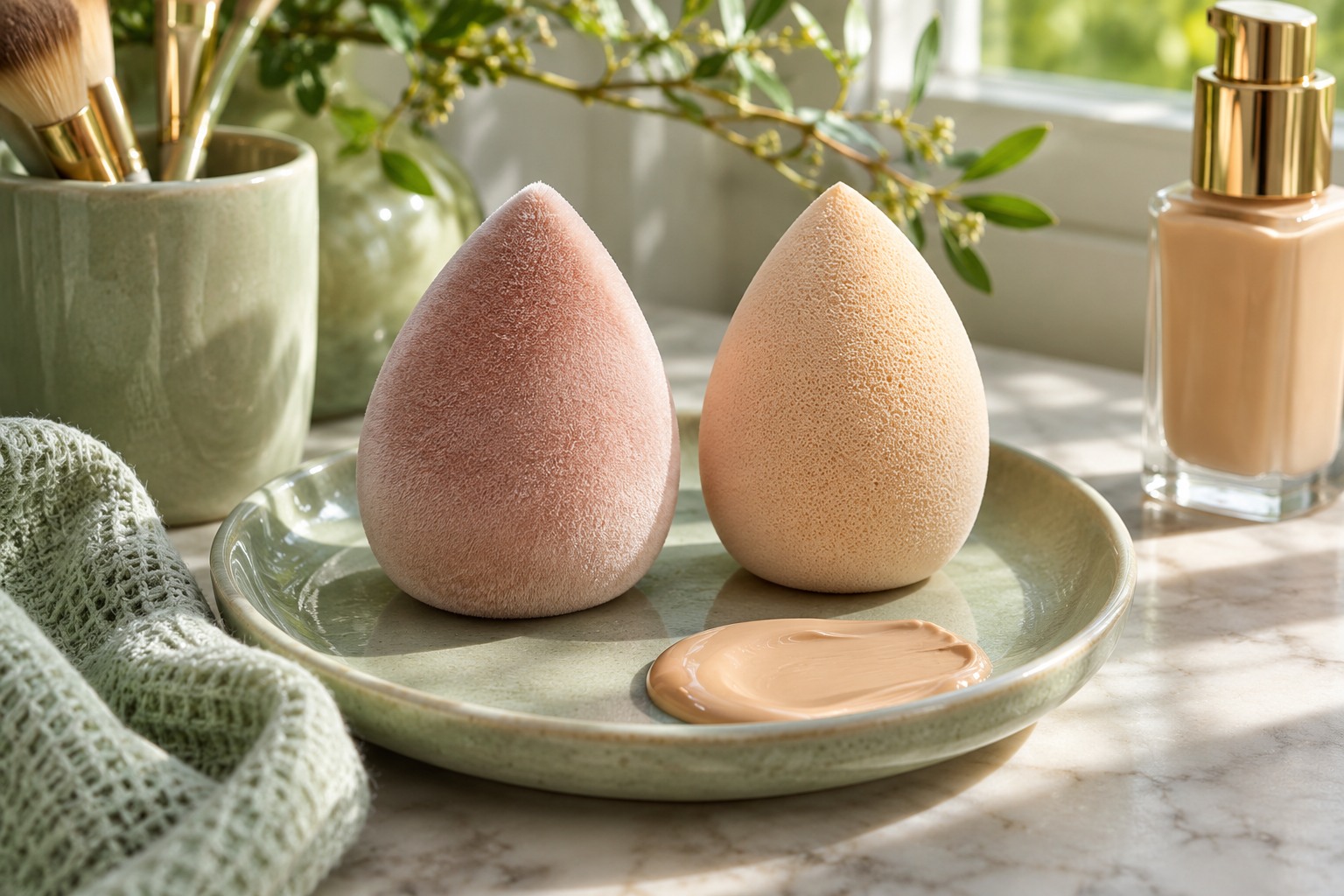
Juno & Co. Original Microfiber Velvet Makeup Sponge
The viral beauty sensation that revolutionized makeup application. Engineered with microscopic ultra-fine microfiber bristles that create a soft-focus, airbrushed finish while using 50% less foundation than traditional makeup sponges.
Best for: Full coverage, saving expensive foundation, and airbrushed camera finish.
Check current price on Amazon
Best Iconic Classic Hydrophilic Blender
beautyblender The Original Beauty Makeup Sponge
The award-winning global benchmark crafted from exclusive open-cell hydrophilic foam. Expands with water to ensure makeup sits on top of the sponge, delivering an effortless, flawless, dewy second-skin finish with zero streaks.
Best for: Natural dewy finish, sheer coverage, sensitive skin, and streak-free blending.
Check current price on Amazon
Best Ergonomic Microfiber Teardrop Sponge
Lottie London Microfibre Sponge
Features a dual-ended shape with a flat angled edge and pointed tip wrapped in velvety flocked microfibers. Bounces smoothly across high cheekbones and contours while saving liquid foundation.
Best for: Precision contouring, under-eye setting, and budget-friendly microfiber tech.
Check current price on Amazon
Best Drugstore Hydrophilic Foam Blender
Real Techniques Miracle Complexion Sponge
A dermatologist-favorite 3-in-1 multi-functional sponge featuring a flat edge, round sides, and precision tip. Blends liquid and cream foundations to an immaculate, streak-free dewy finish at an accessible price.
Best for: Budget-friendly everyday blending, flat-edge contouring, and dewy finish.
Check current price on Amazon
Best Solid Cleansing Bar for Microfiber Care
beautyblender blendercleanser solid Pro Makeup Cleanser
A charcoal-infused solid cleansing soap that penetrates deep into microfiber and hydrophilic foam pores. Dissolves waterproof foundation and pigments in seconds without degrading sponge materials.
Best for: Deep hygiene, extending sponge lifespan, and removing foundation stains.
Check current price on Amazon
Formulation & Technique
Mastering Texture, Timing and Placement
Material Science: Open-Cell Polyurethane Foam vs Flocked Microfibers
To understand why different makeup sponges absorb product so differently, one must examine their microscopic material engineering. Classic beauty sponges (such as the original beautyblender) are manufactured from open-cell hydrophilic polyurethane foam. 'Hydrophilic' literally translates to 'water-loving'. When submerged in water, the open-cell foam expands to twice its size, with water molecules filling the internal cellular chambers.
The theory is that because the sponge is saturated with water, it cannot absorb water-based foundation. However, capillary action and surface tension still pull significant liquid foundation into the outer foam pores, resulting in roughly 30% to 50% product loss over time. Velvet microfiber sponges (pioneered by Juno & Co.) solve this through electrostatic flocking: millions of microscopic cut synthetic fibers (measuring less than 1.2 denier) are bonded perpendicular to the foam surface, creating an ultra-dense velvet brush pile that physically blocks liquid foundation from reaching the porous foam core.
Coverage Dynamics: Watercolor Dewiness vs High-Definition Airbrushing
The structural difference produces completely divergent cosmetic finishes. Because classic hydrophilic blenders absorb some pigment and release water onto the skin as you bounce, they naturally sheer out coverage. This makes classic sponges the undisputed champion for natural, dewy 'clean girl' makeup and sheer skin tints.
Velvet microfiber sponges behave like a fusion of a dense flat-top kabuki brush and a blender. Because zero foundation penetrates past the velvet pile, 100% of the dispensed pigment is transferred directly onto the skin. Furthermore, the micro-fibers blend and stipple pigments on a microscopic scale, filling in pores and textural depressions to deliver full-coverage, high-definition, airbrushed glam with a single pump of foundation.
Hygiene and Cleaning Mechanics: The Microfiber Cleaning Challenge
While velvet microfiber sponges save immense amounts of expensive foundation, they present a distinct cleaning challenge. Foundation pigments become trapped between the dense microscopic fibers. If washed with cheap hand soap, pigment residues can cake at the base of the flocking, hardening the velvet pile and turning it rough.
To preserve the cashmere softness of a microfiber sponge, wash it immediately after use using a solid charcoal cleansing bar or oil-based sponge cleanser. Rub the sponge gently against the bar under lukewarm water, using your thumbs to massage lather through the fibers before squeezing out water with a clean towel.